Payment posting is often treated as the last clerical step after a payer sends money. In reality, it is one of the control points that determines whether the practice's financial reports can be trusted. If a payment is duplicated, applied to the wrong claim, posted under the wrong payer, adjusted incorrectly or later reversed without reconciliation, the collection total may look better or worse than the practice's actual financial position.
The same posting error can also create a false patient balance, hide payer AR, trigger unnecessary follow-up, understate a credit, or make a denial appear resolved when it is not.
What payment posting should accomplish
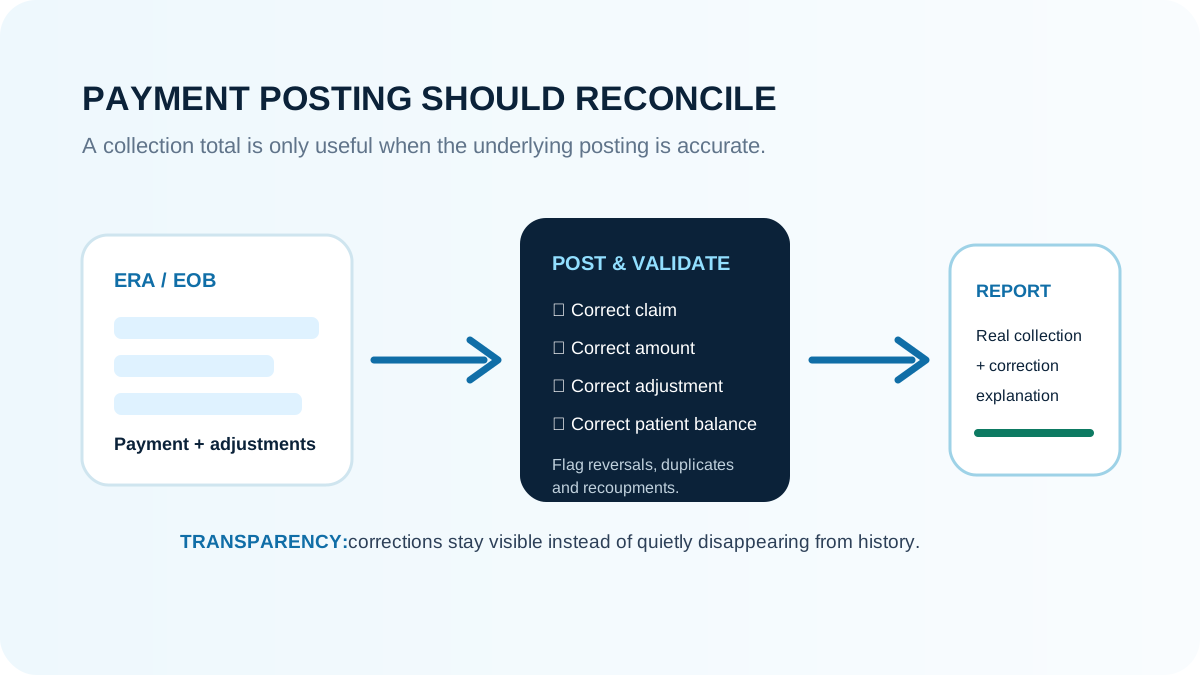
After claim adjudication, the payer's remittance advice explains payment and adjustment information. CMS notes that the ERA or standard paper remittance contains final adjudication information and can report decisions at the claim and service-line level. The posting process should translate that adjudication into the practice-management ledger accurately.
That means more than entering a check amount. It can include payer payment, contractual adjustment, deductible, coinsurance, copay, non-covered amount, denial/remark information, recoupment, reversal, interest or other payer-level adjustments depending on the remittance.
1. Duplicate payment posting can inflate collections
A common reporting distortion occurs when the same payment is posted twice—perhaps once manually and once through ERA auto-posting, or once from an original remittance and again during reconciliation. The ledger temporarily shows more collections than the practice actually received.
When the duplicate is discovered and removed in a later month, the practice can see a confusing drop in collections. CareMedox's reporting principle is to show that correction rather than hide it. If a previously reported payment must be corrected, reversed or removed, the reducing amount should be reflected transparently in the following reporting cycle with an explanation of why the number changed.
2. A payment can be posted to the wrong patient or claim
Misapplied payments are particularly damaging because one account looks paid while another remains falsely outstanding. The AR team may chase the payer on a claim that was already paid, while another patient's account may show an incorrect credit.
Reconciliation should use payer, check/EFT trace, remittance, claim identifiers, patient, date of service and line-level information as available—not merely dollar amount matching.
3. Incorrect adjustments can erase legitimate AR
A contractual adjustment, denial write-off, non-covered amount and patient-responsibility amount are not interchangeable. If staff uses the wrong adjustment reason or writes off a balance before determining whether it is contractually required, recoverable payer AR can disappear from the report.
Adjustment policies should define who can post each type of adjustment, when documentation is required and when a balance needs review before write-off.
4. Reversals and recoupments require follow-through
Payers can reverse or recoup previous payments. If the reversal is posted but the underlying claim is not returned to an actionable AR status, the practice may recognize the loss but never work the reason. Conversely, if the recoupment hits the bank but is not posted correctly, the financial ledger and cash account stop agreeing.
Every reversal should answer: which original payment is affected, why, what balance is reopened, whether a corrected claim or appeal is possible, and who owns the next action?
5. ERA auto-posting still needs exception management
Electronic remittance can improve efficiency, but automation does not remove the need for controls. Exceptions can occur because of payer mapping, adjustment logic, unmatched claims, provider-level adjustments, secondary payment, takebacks or configuration issues. Auto-posted batches should still be reconciled to the associated EFT/check and reviewed for exceptions.
CMS describes ERA as a tool that can support faster communication, reconciliation and electronic posting. The operational benefit is strongest when the practice also has a disciplined exception process.
6. Patient balances depend on correct payer posting
Patient statements should be generated only after payer responsibility has been processed and posted accurately. If deductible, coinsurance, copay, contractual adjustment or secondary coverage is wrong, the patient can receive an incorrect bill.
This is not only a customer-service issue. Incorrect patient balances create calls, refunds, complaints, rework and reporting noise.
7. Posting errors can make AR reports misleading
AR is downstream from payment posting. If paid claims remain open, AR is overstated. If unpaid balances are written off incorrectly, AR is understated. If payments are applied to the wrong dates or claims, payer-level aging becomes difficult to interpret.
When practice leaders review AR, they should therefore ask whether the payment-posting process is reconciled—not only whether the AR team is making payer calls.
A payment-posting control sequence
- Identify the deposit. Match EFT/check amount and payer.
- Locate the remittance. Confirm the ERA/EOB/SPR associated with the payment.
- Post claim and line-level adjudication accurately. Payment, adjustments and patient responsibility should reflect the remittance.
- Review exceptions. Unmatched claims, unusual adjustments, reversals, zero-pay claims and provider-level adjustments need ownership.
- Reconcile batch total. Posted activity should reconcile with remittance and deposit, accounting for documented adjustments.
- Update AR status. Paid, partially paid, denied and reopened balances should enter the correct follow-up queue.
- Explain later corrections. If a prior-period posting was wrong, correct the ledger and disclose the impact in reporting.
Questions practice leaders should ask
- Do posted batches reconcile to EFT/check deposits and remittances?
- Who reviews auto-posting exceptions?
- How are duplicate payments detected?
- How are reversals and recoupments routed back to AR?
- Can staff distinguish contractual adjustments from write-offs?
- How are unapplied cash and credits monitored?
- Does the monthly collection report explain material posting corrections from prior periods?
Accurate posting does not make revenue by itself, but inaccurate posting can make every revenue decision harder. It is the financial translation layer between payer adjudication and the practice's operational truth.