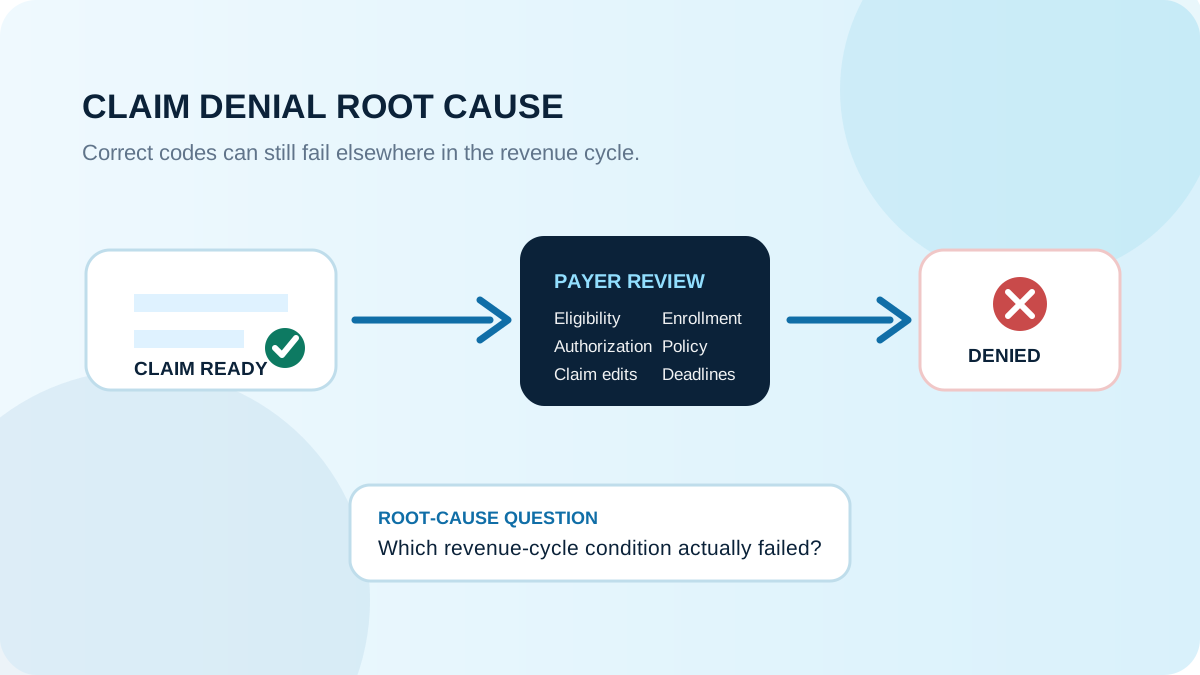
When a practice sees a large 90-day or 120+ accounts-receivable balance, the easiest reaction is to call it “old AR.” That label is too broad to be useful. The aging bucket may contain very different problems: a clean unpaid claim, an unresolved denial, a rejected claim that was never corrected, a coordination-of-benefits issue, an authorization problem, a payment that was never posted, a patient balance, a credit or adjustment problem, or a claim that has already lost its recovery window.
The first objective is therefore not simply to “work the oldest claims.” It is to understand what is inside the aging and which balances still have a realistic path to resolution.
Why the 90+ bucket deserves management attention
As claims age, the number of available recovery paths can shrink. Appeal windows may close. Payer portals may archive information. Staff may lose context about what happened. Authorization or documentation issues become harder to reconstruct. Patient balances become more difficult to collect. The longer a balance sits without a defined next action, the more likely it is to turn into avoidable write-off pressure.
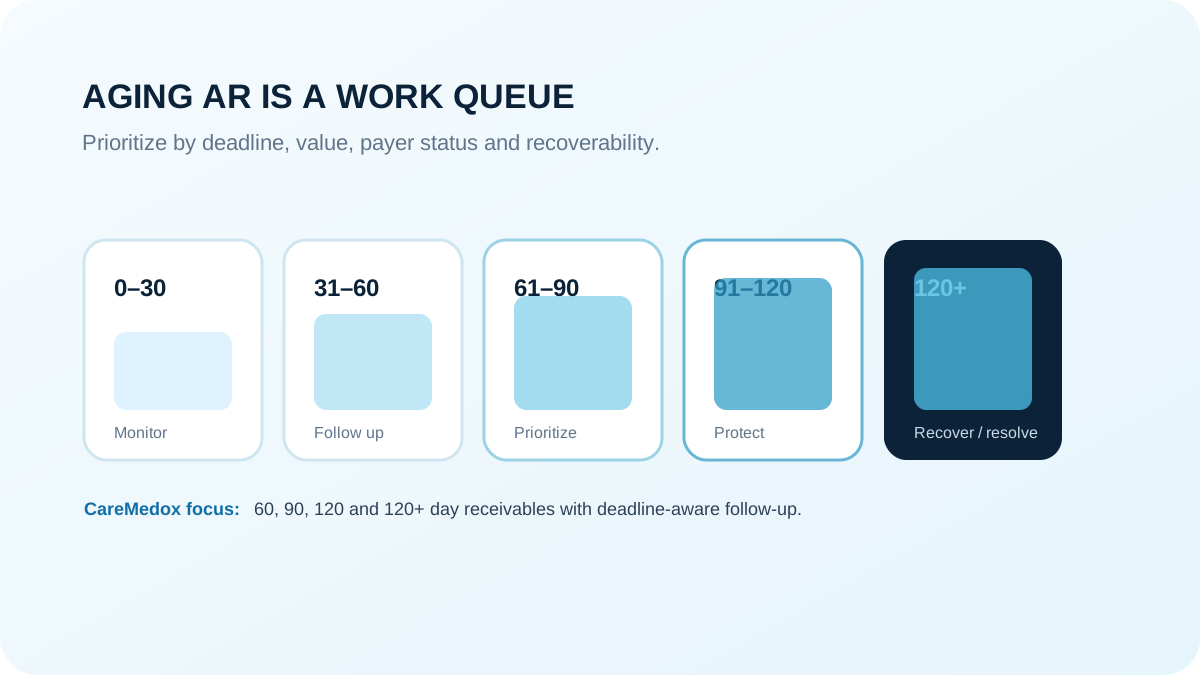
This is why CareMedox places deliberate operational focus on 60-, 90-, 120- and 120+ day receivables while also working to prevent new claims from entering those buckets.
Step 1: Separate insurance AR from patient AR
Do not evaluate all aging under one number. Insurance balances and patient balances require different workflows, compliance considerations, communication and likelihood-of-collection analysis. Within insurance AR, split primary, secondary and tertiary payer balances where relevant. Within patient AR, distinguish true patient responsibility from balances that may be sitting there because insurance adjudication or posting is incomplete.
A patient should not receive a bill simply because the ledger currently shows a patient balance. Confirm that insurance processing, contractual adjustments, secondary billing and payment posting are complete first.
Step 2: Identify claims with deadline exposure first
Age alone does not tell you urgency. A 75-day claim with a filing or appeal deadline approaching can be more urgent than a 130-day claim that still has a valid reconsideration pathway. Each aged claim should have its relevant payer deadline recorded when the issue is known.
Priority queues should surface claims at risk of losing timely filing, corrected-claim, reconsideration or appeal rights. A claim that can be fixed today but is allowed to cross a deadline tomorrow becomes a different financial problem.
Step 3: Validate that the balance is real
Before repeated payer calls, confirm that the AR balance actually represents money still due. Common causes of false or distorted AR include:
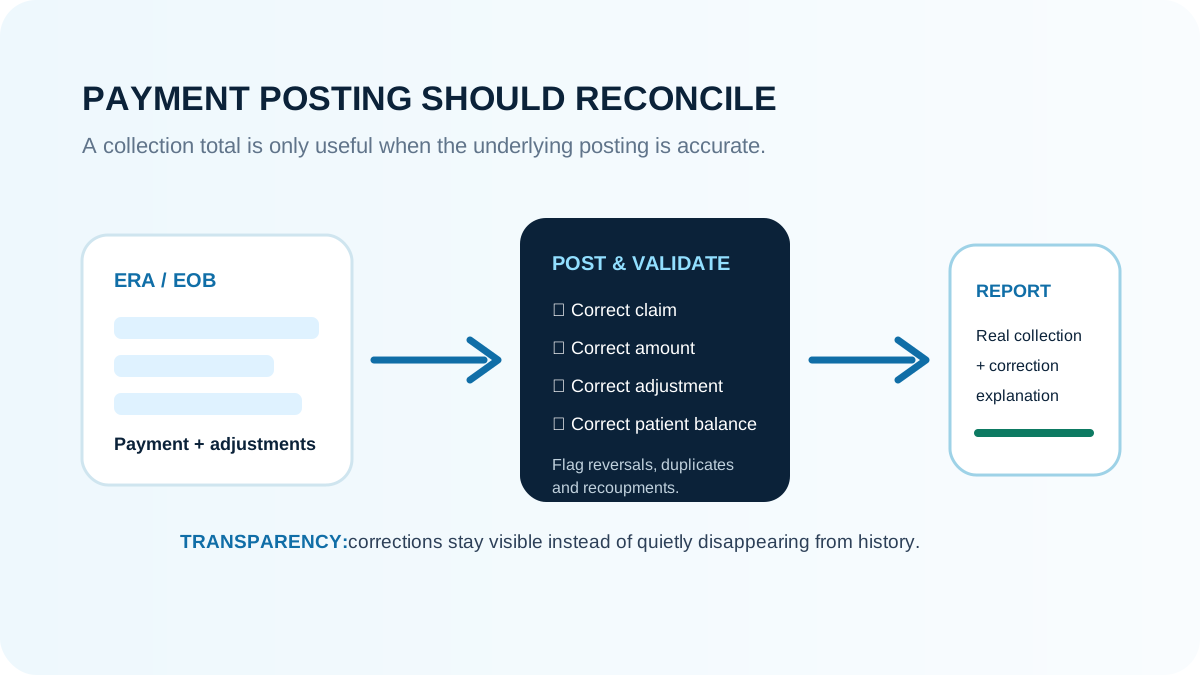
- ERA/EOB received but payment not posted;
- payment posted to the wrong claim, patient or date of service;
- duplicate charges or duplicate balances;
- contractual adjustment not posted correctly;
- secondary payment or crossover not reflected;
- reversal or recoupment not reconciled;
- credit balance offsetting another account;
- claim status changed but the practice-management ledger was not updated.
CMS describes the remittance advice as the payer's adjudication and adjustment information for claims and lines. Reconciliation between the remittance, bank deposit/EFT and practice ledger is therefore essential before deciding that a payer still owes the full balance.
Step 4: Put each aged claim into a root-cause category
An AR team is more effective when every touched claim leaves with a defined status and next action. Useful categories include:
- payer processing / no decision;
- eligibility or coverage;
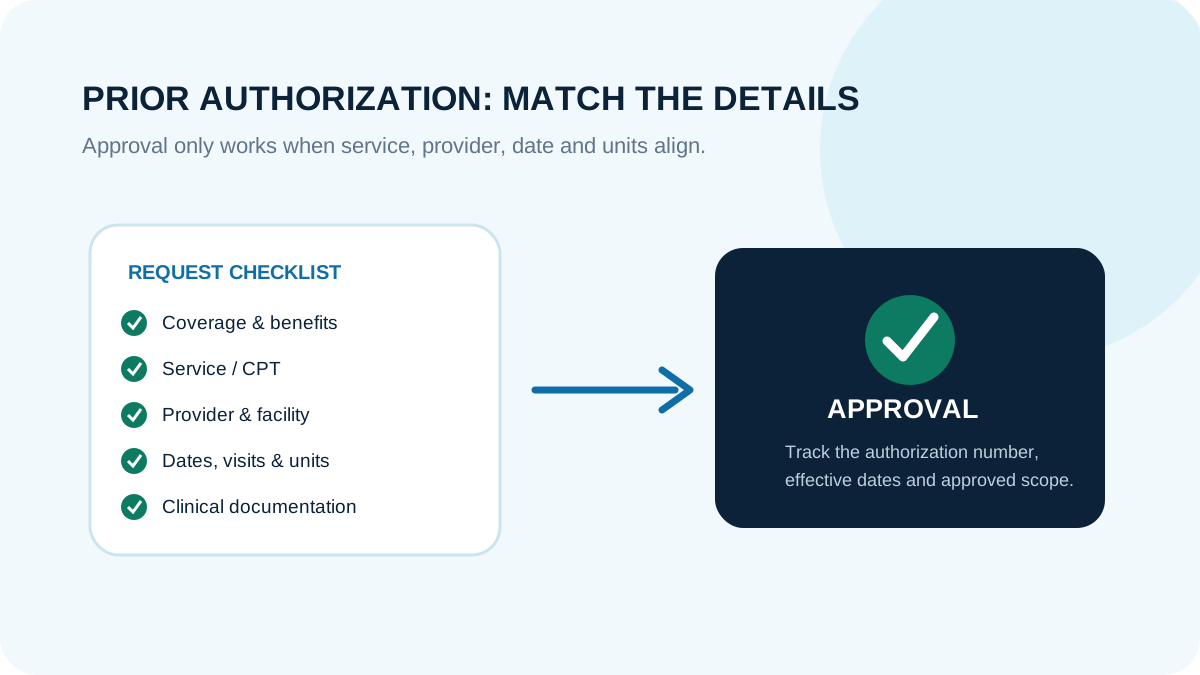
- authorization or referral;
- coding / modifier / claim construction;
- medical necessity / documentation;
- credentialing or provider enrollment;
- coordination of benefits;
- underpayment / contract issue;
- payment-posting mismatch;
- patient responsibility;
- appeal/reconsideration pending;
- non-recoverable with documented reason.
Without categories, “AR follow-up” often becomes repeated status calls. With categories, leadership can see where the aging is being created.
Step 5: Work by value and recoverability, not just claim count
Ten $50 balances and one $8,000 balance are not financially equivalent. Neither is a $5,000 claim with a clear corrected-claim path equivalent to a $5,000 claim whose appeal rights expired months ago. A strong work queue considers dollar value, deadline, payer, denial type, documentation availability and probability of recovery.
This does not mean small balances should be ignored. It means the practice should use a rational priority system so scarce follow-up time is spent where it can protect the most revenue while still maintaining systematic coverage.
Step 6: Review payer behavior by aging bucket
Ask whether one payer is disproportionately represented in 90+ AR. If so, determine whether the problem is payer processing, missing information, claim format, contract configuration, authorization, enrollment or internal follow-up. Payer-level aging trends often reveal a workflow problem that claim-by-claim work hides.
Step 7: Connect aged AR to denial management
A denied claim that remains in AR without an appeal or correction plan is not really being managed. Denial management and AR follow-up should share information. The denial team should identify the reason and recovery pathway; the AR process should protect follow-up dates and ensure the claim actually moves to resolution.
Step 8: Review what created the aging
The goal is not only to reduce this month's 120+ balance. It is to reduce the number of new claims entering 120+ next quarter. Once aged claims are categorized, leadership should ask which upstream process created them:
- late charge capture;
- incomplete registration or insurance data;
- authorization not obtained or not matched;
- claim rejected and not corrected promptly;
- denial not routed to the right owner;
- missing records;
- provider enrollment gap;
- posting/reconciliation error;
- lack of payer follow-up cadence.
What a useful monthly aging report should show
A leadership aging report should go beyond a total. Consider showing total AR and aging by 0–30, 31–60, 61–90, 91–120 and 120+ days, then add payer, provider, location or responsible-party detail where useful. For older AR, include trend compared with prior periods and explanation of material changes.
CareMedox reporting is built around this principle: if a number changes, the practice should be able to understand why. That same transparency applies when a previously reported collection must be reduced because a duplicate or incorrect posting is corrected in a later cycle.
Questions providers should ask before approving an aged-AR write-off
- Was the payer response and claim history reviewed?
- Is there still a correction, reconsideration or appeal pathway?
- Was coverage and coordination of benefits rechecked?
- Was authorization/referral status verified?
- Was payment and adjustment posting reconciled?
- Is the balance actually patient responsibility?
- Is the provider enrolled correctly for the date of service?
- What exact reason makes the balance non-recoverable?
- What workflow change will prevent the same type of aging?
Writing off a balance should be the end of a documented review—not the substitute for one.
Primary sources and further reading
Continue with Provider Insights