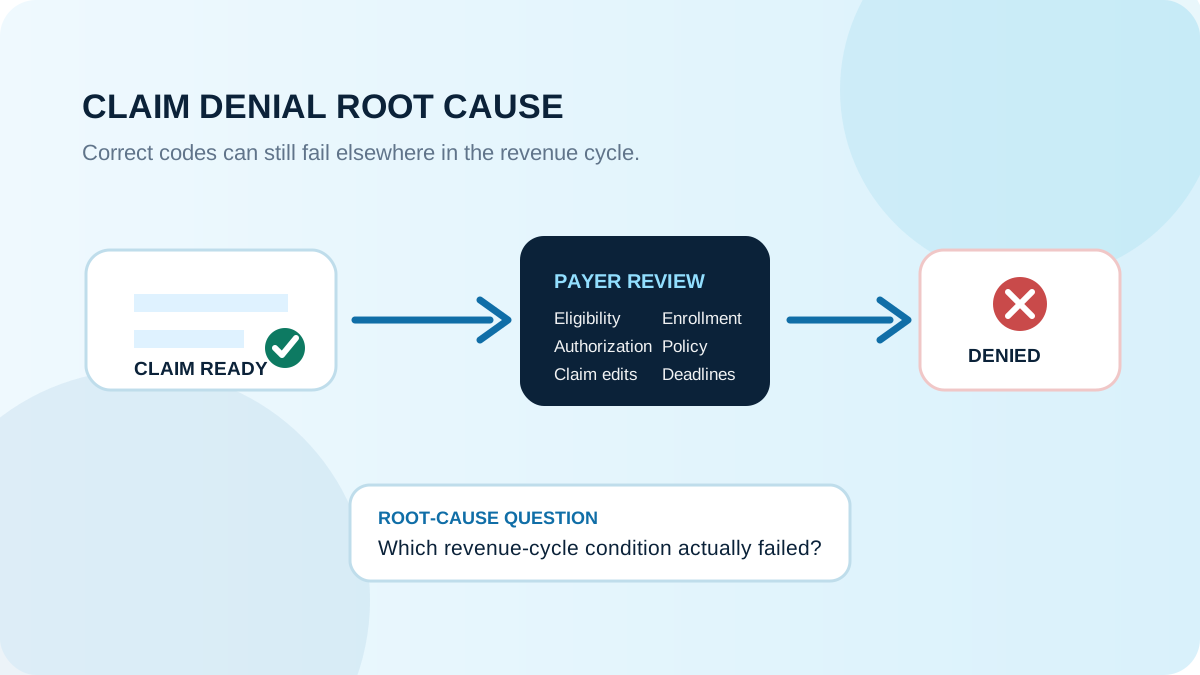
A provider can look at a denied claim and see a valid CPT code, a diagnosis that appears clinically related, an active patient, and a service that was actually performed. It is natural to ask: why did the payer still deny it?
The reason is that claim adjudication is larger than the relationship between one procedure code and one diagnosis code. Payers evaluate eligibility, benefits, authorization, provider enrollment, claim formatting, place of service, modifiers, frequency limits, documentation, medical necessity, coordination of benefits, filing deadlines and payer-specific edits. A claim can therefore be clinically reasonable and still be administratively non-payable.
1. Start by separating a rejection from a denial
A rejection usually means the claim failed before normal adjudication because the submission could not be accepted or processed as sent. Examples include missing or invalid identifiers, formatting problems, subscriber-data mismatch or other front-end claim defects. A denial generally means the payer adjudicated the claim and decided not to pay all or part of it.
This distinction matters because the work queue is different. A rejected claim often needs rapid correction and resubmission. A denied claim may require correction, reconsideration, medical records, an appeal, coordination-of-benefits work or payer-specific follow-up. Treating both as the same task creates unnecessary aging.
2. Eligibility may have been active—but the benefit may not cover the service
“Active insurance” is not the same as “this service is payable under this plan.” Eligibility verification should look beyond an active/inactive flag. Depending on the service and payer, the practice may need to confirm plan type, effective dates, network status, copay, deductible, coinsurance, benefit limitations, referral requirements, authorization requirements and whether another payer is primary.
A patient can be active on the date of service while the claim still denies because the service is excluded, the provider is out of network, another insurer is primary, the benefit requires a referral, or the coverage information changed after the appointment was scheduled.
3. Prior authorization can fail in ways that are easy to miss
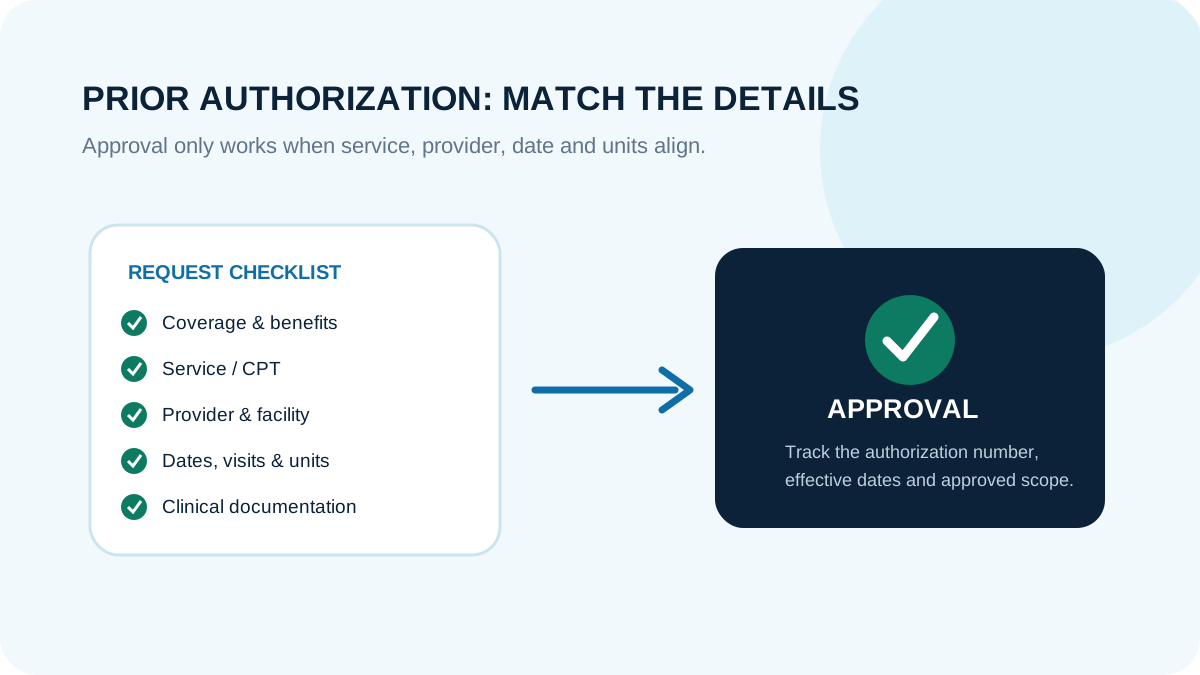
Even when an authorization number exists, the claim can still deny if the authorization does not match the billed service. Review the approved procedure, provider, facility, date range, number of visits or units, diagnosis/medical-necessity criteria and any plan-specific conditions.
Common operational failures include an authorization obtained for one CPT while another is performed, authorization under the wrong servicing provider, expired approval, exhausted visits, an incorrect facility, or a change in treatment plan that was never reflected in the authorization.
4. A modifier, place of service or claim detail may change how the payer evaluates the service
Two claims can contain the same CPT and diagnosis but adjudicate differently because of modifiers, units, place of service, rendering provider, billing provider, taxonomy, frequency, global-period edits or other claim-level details. That is why denial review should compare the complete submitted claim—not merely the procedure and diagnosis columns.
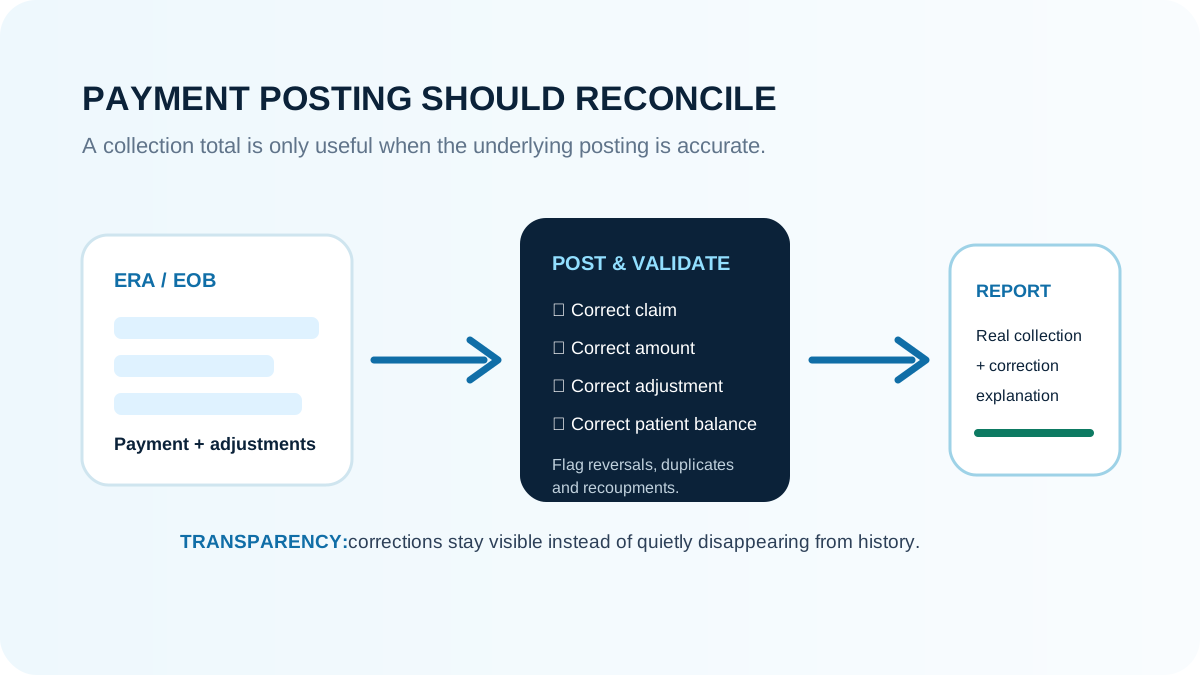
When the denial message is vague, examine the electronic remittance advice and the claim-level/line-level adjustment reason information. CMS explains that remittance advice communicates adjudication and adjustment information at the claim or service-line level, which helps providers connect payment decisions to what was submitted.
5. Provider enrollment and credentialing can block an otherwise correct claim
A payer may deny or reduce payment when the provider is not enrolled correctly for the date of service, the effective date is wrong, the billing/rendering relationship is not recognized, the location is not linked correctly, or the payer's records have not caught up with a credentialing change.
This is particularly important when a practice adds a provider, changes an address, changes ownership/tax information, opens another location or begins seeing patients before payer enrollment is fully effective.
6. Medical necessity and documentation are separate from code validity
A valid CPT code does not establish medical necessity by itself. Coverage policies can require specific diagnoses, clinical findings, conservative treatment history, frequency limits, documentation elements or other criteria. If the payer requests records, the documentation must support the service that was billed—not merely show that the patient had the condition.
When a denial is linked to medical necessity or documentation, the billing team should not blindly rebill the same claim. The next step may be records review, coding clarification, payer-policy comparison, reconsideration or appeal depending on the denial and what the documentation supports.
7. Coordination of benefits can make the “correct” payer the wrong payer
Practices should verify whether the payer being billed is actually primary for the date of service. Employer coverage, Medicare secondary payer situations, Medicaid, Medicare Advantage, workers' compensation, auto coverage and other arrangements can change claim order. If the payer believes another plan should pay first, the claim can deny even though every code on the claim is correct.
8. Timely filing turns a fixable problem into a revenue-loss problem
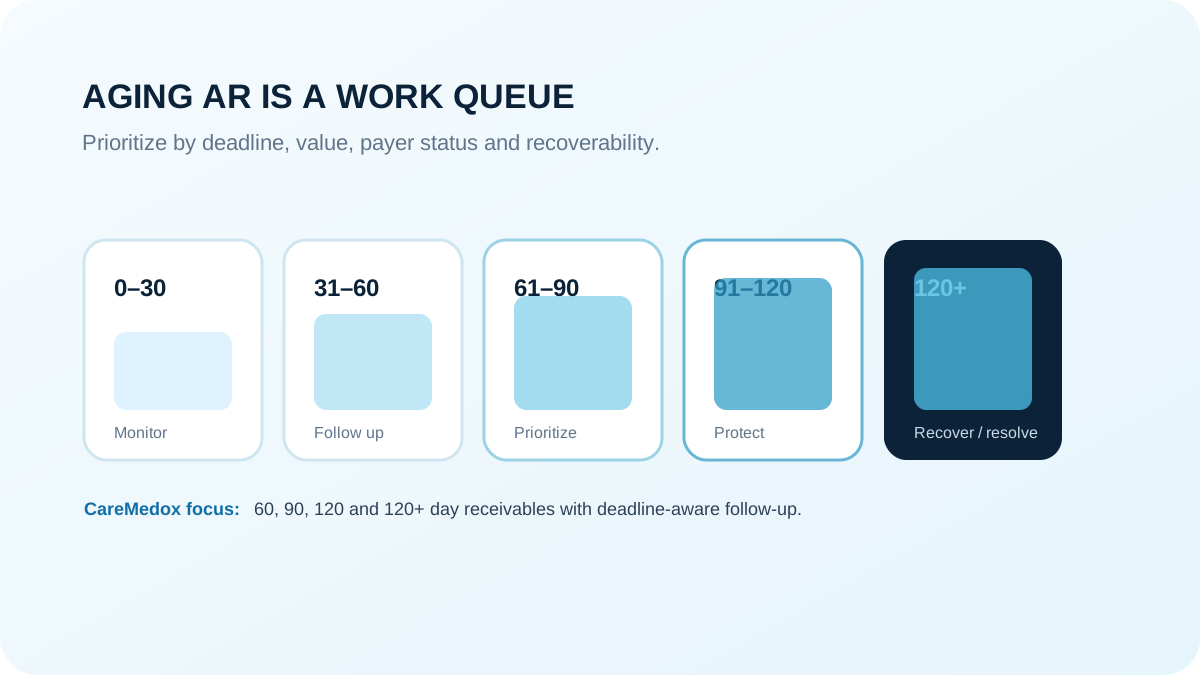
Many denial causes are correctable when they are identified early. They become much more serious when a rejected or denied claim sits untouched until filing, reconsideration or appeal deadlines expire. This is why denial work should be connected to aging management and deadline tracking rather than handled as an isolated queue.
At CareMedox, timely-filing accountability is a core operating principle. If an eligible claim becomes unrecoverable because CareMedox team negligence caused the applicable timely filing limit to be missed, responsibility is handled under the governing service agreement and applicable Medicare fee schedule.
9. Do not measure denials only by percentage
A denial ratio is useful, but the practice also needs to know what is denying, why, how much revenue is attached, whether the denial is preventable, who owns the correction, and whether the same problem is repeating. A low denial percentage can still hide a serious issue if a small number of high-value claims are affected.
Useful denial reporting can include payer, provider, location, denial reason, CPT, claim value, aging bucket, appeal status, overturn result and root-cause category. That turns the denial report into an operating tool rather than a list of unpaid claims.
A practical claim-denial review sequence
- Read the actual payer response. Start with the ERA/EOB, CARC/RARC information and payer portal detail where available.
- Confirm patient coverage and payer order. Recheck eligibility, benefits and coordination of benefits for the date of service.
- Compare authorization/referral requirements. Validate number, dates, CPT/service, units, provider and facility.
- Review the full submitted claim. CPT/HCPCS, ICD-10-CM, modifiers, units, POS, provider identifiers and claim frequency all matter.
- Review enrollment and payer configuration. Confirm effective dates and billing/rendering relationships.
- Check documentation and payer policy when relevant. Determine whether a corrected claim is enough or whether records/reconsideration/appeal are required.
- Protect deadlines. Record timely filing, reconsideration and appeal limits immediately.
- Assign a root cause. The goal is not only to recover this claim but to prevent the same error on the next claim.
What practice leaders should ask their billing team
- What are our top five denial reasons by dollars, not just claim count?
- Which denials originate at the front desk, authorization team, coding/documentation, claim submission or payer side?
- How much denied AR is currently 60, 90, 120 and 120+ days old?
- Which payer-specific denial patterns are repeating?
- What percentage of denials are corrected, appealed, overturned, written off or still unresolved?
- Which workflow change was made after identifying each major root cause?
The strongest denial-management process closes the loop. It does not end when one claim is paid. It sends the reason back to the point in the workflow where the error began.
Primary sources and further reading
Continue with Provider Insights